HVAC & Basic Refrigeration Training Program in Pennsylvania
- Hands-on HVAC and refrigeration training using real-world tools
- Finish in under a year and prepare for entry-level HVAC/R roles
- Career placement support to help you take the next step
- Designed for working adults and career changers
Start Investing In Your Future With BTI Today
"*" indicates required fields
HVAC & Basic Refrigeration Training Program Details
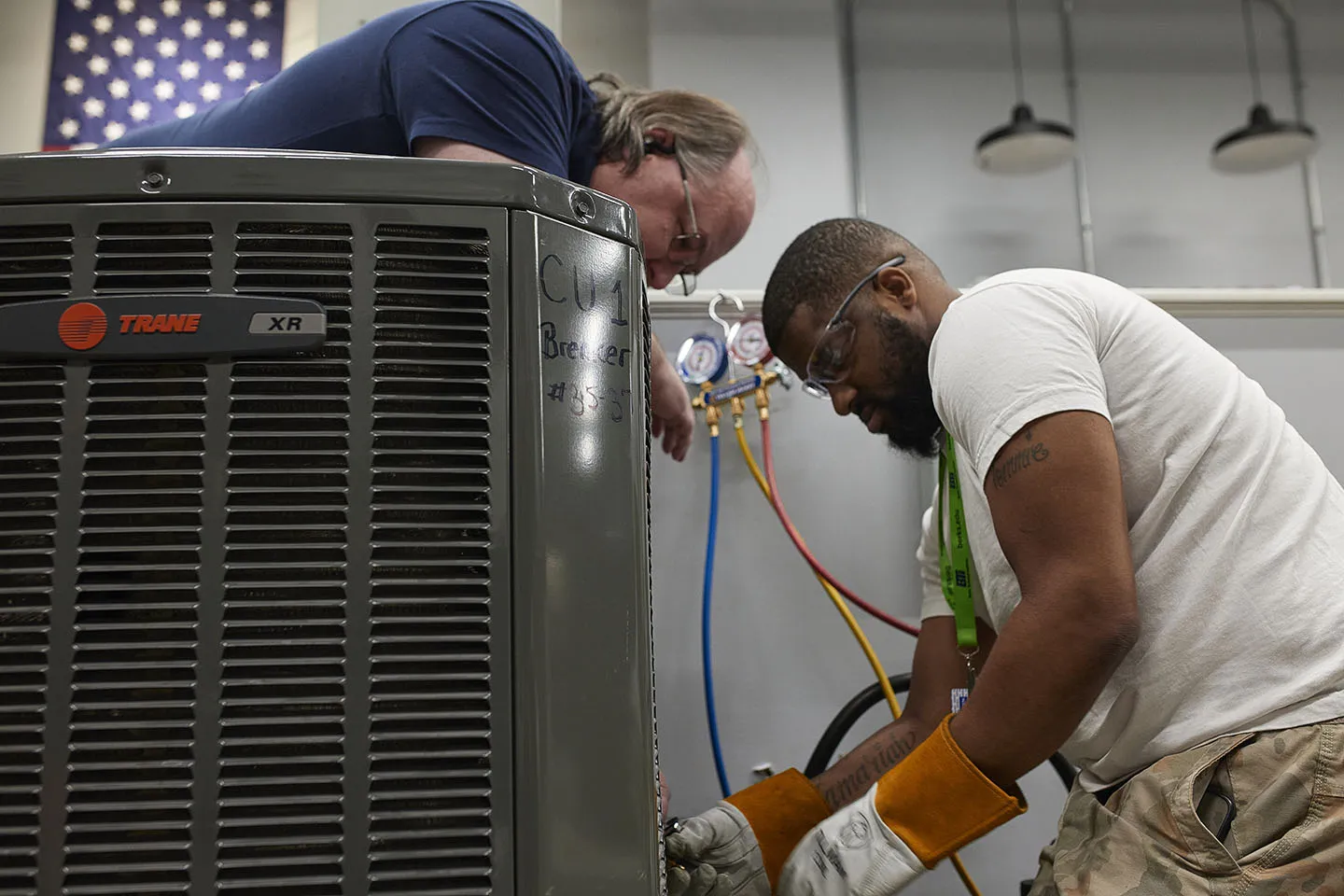
Berks Technical Institute’s HVAC & Basic Refrigeration program prepares students with the foundational skills to enter the HVAC/R field. BTI combines classroom instruction with hands-on, simulated job-site training so students understand what servicing real HVAC and refrigeration systems looks like in the field.
With rolling enrollment every five weeks and a program that can be completed in as little as 10 months, this training is designed for students who want a faster, skills-based path into the workforce. By the end of the program, students should be prepared to sit for the EPA Section 608 Technician certification, a common requirement for working with refrigerants.*
HVAC & Basic Refrigeration Diploma Program
- 50 Credit Hours
- Can be completed in as little as 10 months
- Offered at BTI campuses in Allentown and Wyomissing, Pennsylvania
*BTI does not guarantee third-party certifications. Certification requirements for taking and passing certification examinations are not controlled by BTI but by outside agencies and are subject to change by the agencies without notice to BTI. Therefore, BTI cannot guarantee that graduates will be eligible to take certification examinations, regardless of their eligibility status upon enrollment.
Is the HVAC & Basic Refrigeration Program Right for You?
This table helps career changers understand whether this HVAC training program matches their goals and expectations.
This Program Is a
Good Fit If You…
- Want hands-on HVAC and refrigeration training
- Prefer working with tools and equipment
- Want to enter the HVAC field quickly
- Are open to physical, problem-solving work
- Plan to work under experienced technicians
This Program May Not Be the
Best Fit If You…
- Want to skip entry-level roles
- Prefer desk-based or office work
- Are looking for a four-year degree
- Want immediate independent contracting
- Expect to work fully unsupervised right away
Core Skills Taught in BTI’s HVAC & Basic Refrigeration Training Program
What You Can Learn in Our HVAC Program
Learn how to install, maintain, and troubleshoot air conditioning systems while following EPA and Clean Air Act regulations for refrigerant handling.
Gain an understanding of electrical circuits, motors, and control systems to more efficiently repair HVAC units.
Learn how to repair, install, and maintain heating units, furnaces, and heat pumps for both residential and commercial buildings.
Study piping design, load calculations, ductwork, airflow, exhaust, and intake of refrigeration systems.
What Does an HVAC & Basic Refrigeration Technician Do?
If you’re considering a career change, it’s important to understand what HVAC/R work actually involves. We’ve listed common tasks associated with entry-level HVAC and refrigeration roles, to help you decide if this hands-on career path is the right fit.
*BTI cannot guarantee employment or salary.
Installation
Skills & How They’re Used
- Prepping and maintaining job site safety
Helps set up safe work areas by following OSHA guidelines, handling tools properly, and reducing hazards before installation begins - Performing HVAC installs and removals
Assists with installing and removing HVAC units, ductwork, and components while learning proper handling and placement techniques - Connecting and changing electrical wiring
Supports basic electrical connections for HVAC systems, such as thermostats, control boards, and power supplies, under supervision - Testing for carbon dioxide and monoxide
Uses testing equipment to help check combustion systems for safety issues and maintain air quality standards - Following complex blueprints
Reads and interprets HVAC schematics and layout plans to support accurate system installation
Maintenance & Troubleshooting
Skills & How They’re Used
- Performing diagnoses using diagnostic tools
Uses gauges, meters, and diagnostic equipment to help identify airflow, pressure, or temperature issues - Troubleshooting systems
Assist in identifying common HVAC problems, like airflow restrictions or component failures - Performing tests and analyzing results
Help test system performance after maintenance or repairs - Performing repair work while maintaining site safety
Support repair tasks while following safety procedures and job site protocols - Verifying systems have been fully repaired
Helps confirm systems are running correctly by checking temperatures, pressures, and system responses
Customer Service
Skills & How They’re Used
- Listening and understanding customer needs
Gather information from customers about system issues, comfort concerns, or service history - Communicating issues and solutions
Explain basic HVAC problems and service steps in clear, customer-friendly language - Explaining pricing
Communicate service costs by understanding labor time, parts, and basic pricing structure - Accurately pricing time for repair
Assist with estimating labor time for common repairs based on task complexity and job scope
What is NCCER?
The National Center for Construction Education and Research (NCCER), created in 1996, is a not-for-profit 501(c)(3) education foundation. NCCER was developed with the support of more than 125 construction CEOs, and various association and academic leaders to create a standardized training and credentialing program for the construction industry.
Why is NCCER important to you?
Earning NCCER’s industry-recognized credentials means you, having undergone approved training, and have met the standards set by the NCCER. Your universally recognized credentials in your craft represent a national portability of your skills. Additionally, NCCER manages credentialing and certification through its Registry System, which assists craft trainees and professionals by maintaining their records in a secure database. NCCER also drives multiple initiatives to enhance career development and recruitment efforts for the industry, primarily through its Build Your Future initiative.
Why is NCCER important to employers?
Many organizations and companies track the qualifications of their craft professionals and possible new hires through NCCER’s Registry System. Those with NCCER credentials may be more desirable to potential employers.
BTI’s HVAC/BR Program is Offered At:
Allentown

2200 N Irving Street, Allentown, PA 18109


Industries: Healthcare, Information Technology, Skilled Trades
Wyomissing
2205 Ridgewood Road Suite 100 Wyomissing, PA 19610
Industries: Healthcare, Information Technology, Skilled Trades

Career Options for HVAC & Basic Refrigeration
Graduates of BTI’s HVAC & Basic Refrigeration program typically pursue entry-level HVAC/R roles that allow them to build experience while working with trained technicians and supervisors. Exact job duties vary by employer and work setting.*
Common Entry-Level Roles Include:
- Commercial HVAC Installer
Supports installation of equipment and components on commercial job sites - Residential HVAC Service Technician
Helps diagnose, maintain, and repair home heating and cooling systems - Refrigeration Technician
Assists with service and maintenance of refrigeration systems and refrigerant-related tasks - Commercial HVAC/R Technician
Supports broader HVAC/R work across commercial buildings and equipment
*BTI cannot guarantee employment or salary.
Where Entry-Level HVAC/R Techs Commonly Work
| Work Setting | What That Often Means Day-to-Day |
|---|---|
| Residential homes | Service calls, diagnostics, basic repairs, customer communication |
| Commercial buildings | Larger systems, job-site coordination, installs and scheduled maintenance |
| Refrigeration environments | Refrigerant handling tasks, temperature control systems, equipment checks |
| Facilities/maintenance teams | Preventive maintenance, troubleshooting, steady schedule work |
HVAC & Basic Refrigeration Program FAQs
*BTI cannot guarantee employment, salary, or certification outcomes.
Yes. Many HVAC technicians come from physically demanding jobs and transition into HVAC because it offers year-round demand, skill-based advancement, and the opportunity to earn more as experience grows.
No prior HVAC experience is required. The program is designed to teach foundational concepts and hands-on skills from the ground up.
HVAC work can be physical and may involve lifting, bending, and working in tight spaces. Many students choose HVAC because they prefer hands-on, active work rather than sitting at a desk.
Most graduates begin in entry-level roles working under experienced HVAC technicians. Independence typically comes with additional on-the-job experience.
The program combines classroom instruction with hands-on training using HVAC equipment, tools, and simulated job-site scenarios to prepare students for real-world work environments.
Students learn the basics of residential and commercial HVAC systems, heating systems, air conditioning, refrigeration, electrical controls, and safety procedures.
Yes. The program covers refrigerant handling and EPA regulations, helping prepare students to sit for the EPA Section 608 Technician certification.
The program is designed to prepare students to sit for the EPA Section 608 Technician certification, which is commonly required for working with refrigerants.*
No. Licensing requirements vary by state and typically require additional supervised work experience beyond trade school training.
Graduates typically pursue entry-level roles such as HVAC installer, HVAC service technician, refrigeration technician, or HVAC/R technician, depending on employer needs.*
The program can be completed in as little as 10 months.
Many students balance work and school. Scheduling options vary by campus, and admissions representatives can help discuss realistic expectations during enrollment.
BTI offers career services support such as resume guidance and job search preparation. While employment is not guaranteed, these services are designed to help graduates pursue entry-level opportunities.*
The HVAC & Basic Refrigeration program is offered at BTI campuses in Allentown and Wyomissing, Pennsylvania.
Scheduling a campus tour or speaking with admissions can help you see the labs, ask questions, and better understand the day-to-day expectations of HVAC work before committing.
Many students choose HVAC because the work is in demand year-round, offers multiple career paths, and allows technicians to build skills that can transfer across residential, commercial, and refrigeration settings.
Ready to Start Your HVAC Career Path?
If you’re looking for an HVAC training program in Pennsylvania that prepares you for entry-level HVAC and refrigeration work, Berks Technical Institute can help you take the first step. Learn more about the HVAC & Basic Refrigeration program or schedule a campus tour today.